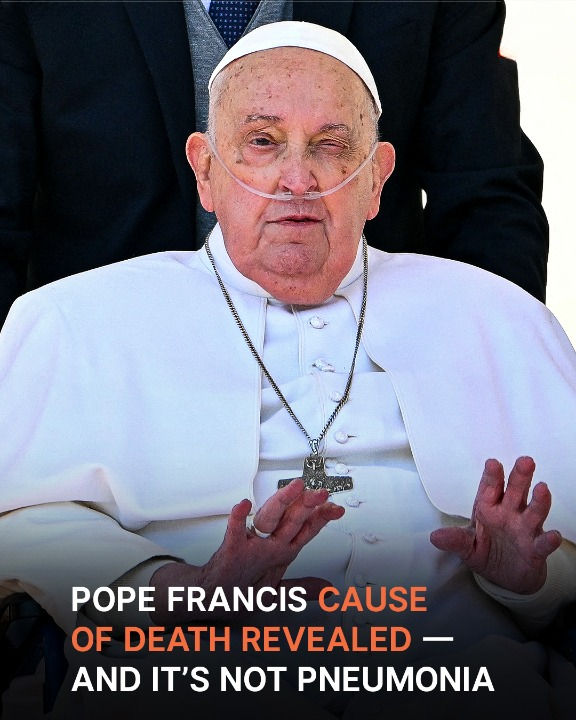
Less than a day after Pope Francis’ sudden passing sent shockwaves through the Catholic world, the Vatican has officially confirmed his cause of death. Faithful from around the globe have begun gathering in St. Peter’s Square, standing in silent reflection beneath the very balcony where he last appeared just one day earlier.
The Vatican announced that the 88-year-old pontiff died from a cerebral stroke, which led to a coma and, ultimately, irreversible cardiocirculatory collapse—not pneumonia, as many had speculated.
His final public appearance came on Easter Sunday, April 20, where, despite visibly weakened health, he surprised thousands by emerging on the central balcony of St. Peter’s Basilica to offer a blessing. It would be his last.
A Final Farewell
That Sunday, Pope Francis appeared in his wheelchair, aided by attendants but visibly alert. Gone were the oxygen tubes he had previously needed. Though he delegated the Easter Mass to Cardinal Angelo Comastri, the Pope delivered a brief and emotional message of peace to the cheering crowd. “Happy Easter, dear brothers and sisters,” he declared, waving to thousands who responded with chants of “Viva il Papa!”
That same evening, he met briefly with U.S. Vice President JD Vance at his Vatican residence, continuing his spiritual and diplomatic duties despite months of health challenges.
By the next morning, April 21, the world would learn that Pope Francis had passed away in his sleep at 7:35 a.m. at Casa Santa Marta. At 9:45 a.m., Cardinal Kevin Farrell officially announced the news: “His entire life was dedicated to the service of the Lord and His Church… He taught us to live the Gospel with courage and compassion.”
Weeks of Declining Health
The Pope had been battling multiple health complications for months. On February 14, 2025, he was hospitalized with double pneumonia. His condition required high-flow oxygen therapy during the day and non-invasive ventilation at night.
Despite this, Pope Francis remained engaged—following spiritual exercises remotely and celebrating the 12th anniversary of his papacy with a cake brought in by his medical team. His resilience was a testament to his deep commitment to service.
By March, his doctors believed he was stable enough for discharge. On March 23, after 38 days in the hospital and two critical health scares, he returned to the Vatican to rest at his residence.
An Emotional Goodbye
After the Pope’s death, the mood in St. Peter’s Square turned solemn. Rosary prayers were held, and spontaneous applause broke out—a gesture of gratitude to a leader who had guided the Church with humility and heart.
Some mourners wrapped themselves in Argentine flags to honor his roots. One pilgrim, Brigitte Thalhammer, said through tears, “He was very, very important.”
Preparations are underway to move Pope Francis’ body to St. Peter’s Basilica on April 23 for public viewing. His apartment in the Apostolic Palace and rooms in Casa Santa Marta have been sealed. A formal death rite was performed Monday evening, and his body has been placed in a coffin in his private chapel.
A Legacy of Compassion
Pope Francis’ final months revealed his physical fragility, but they also displayed his unwavering spirit. In one striking moment, captured in early April, he was seen at St. Peter’s Basilica in informal clothing and a wheelchair, his oxygen cannula visible. It was a rare, humanizing glimpse into the private struggles of a public figure deeply revered by millions.
His appearance sparked debate—some speculated about his role, others were simply moved by his visible vulnerability.
Now, as the Church prepares to lay him to rest, tributes pour in from around the world. “Rest in peace, Pope Francis,” read one message. “You served with love. You will be missed.”
Pope Francis leaves behind a legacy of humility, reform, and compassion—one that will echo long after the bells of St. Peter’s toll in mourning.